

How to clean and store gold jewelry: effective methods
Posted by REDAZIONE
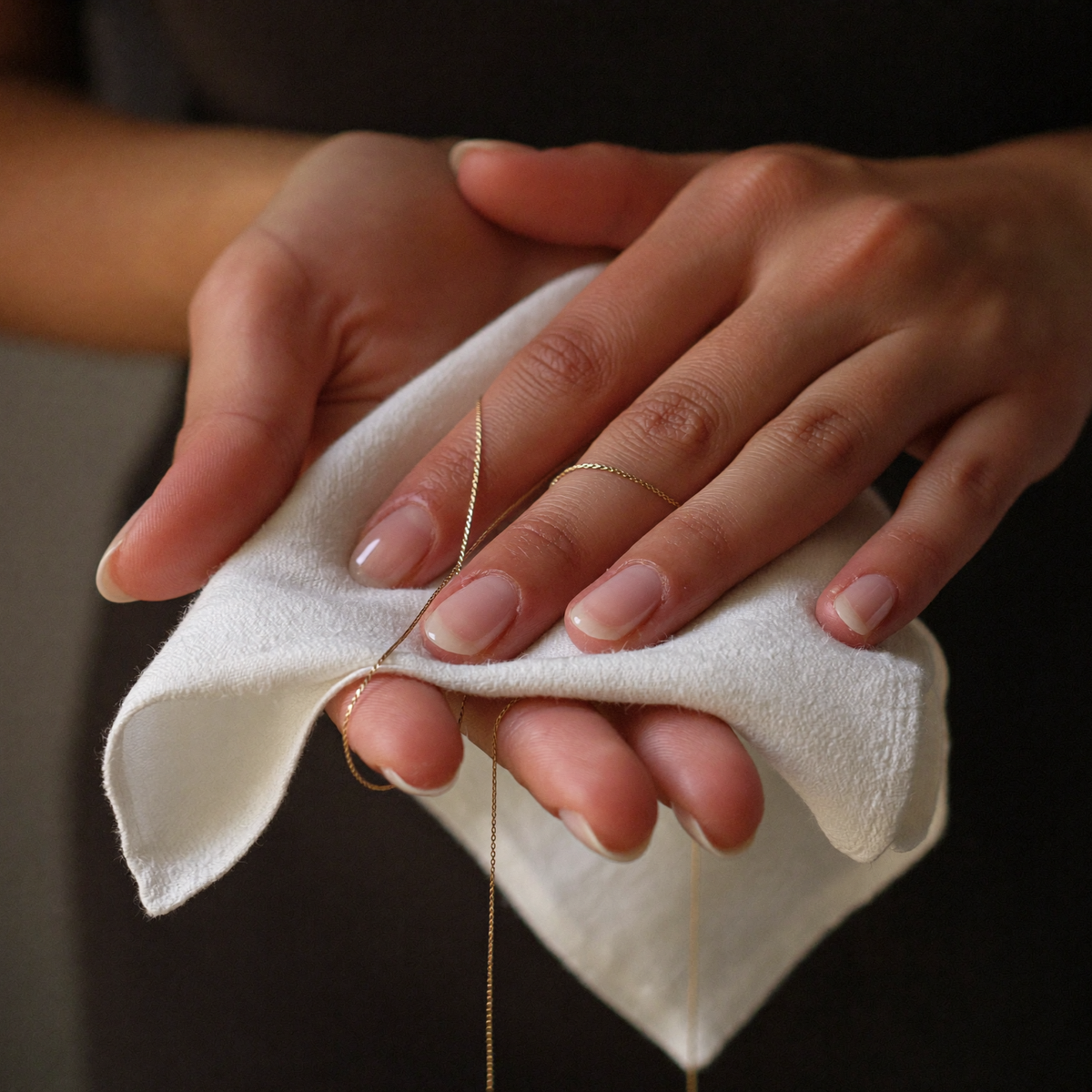
In summary: Gold jewelry can be cleaned with lukewarm water and mild soap, or baking soda for stubborn stains. Proper storage (in fabric pouches, in a dry place away from humidity and perfume) preserves its beauty over time. Annual professional cleaning keeps the piece in perfect condition.
Why 18k gold becomes dull: it's the alloy, not the gold
Pure gold does not oxidize or tarnish. However, 18k gold jewelry is 75% gold (750 thousandths, the number you find on the hallmark): the remaining 25% is an alloy of silver, copper, and, for white gold, palladium or other metals. It is these metals that react with sulfur in the air, chlorine in swimming pools, sweat, and cosmetics, forming the dark patina that makes the jewelry look "dull." The lower the karat, the more alloy is present and the more visible this phenomenon becomes: 9k gold (375) will darken faster than 18k. We explain what the hallmark numbers mean in our guide on 18k, 14k, and 9k gold.
Color also matters: rose gold contains more copper and is the most sensitive to chlorine and salt water, while yellow gold is the most stable. The differences between the three alloys are in our guide on yellow, white, and rose gold.
How to clean gold jewelry: natural and safe methods
Gold is a precious and durable metal, but over time it accumulates dirt, soap residue, and dust that dim its brilliance. The good news is that there is no need to resort to harsh chemicals: natural methods are just as effective and will not damage the metal.
Method 1: Lukewarm water and mild soap (daily)
This is the simplest and most recommended method. Fill a bowl with lukewarm water (about 40°C) and add a drop of Marseille soap or a neutral face cleanser. Soak the jewelry for 5-10 minutes, then gently scrub with a soft-bristled brush (such as an eyebrow brush). Rinse thoroughly with clean water and dry with a soft microfiber cloth.
Method 2: Baking soda (for stubborn stains)
Create a paste by mixing baking soda with a little water. Apply to the stain and gently rub with a soft brush. This method is perfect for very dirty or dull jewelry. Rinse well and dry.
These methods apply to yellow and rose gold. White gold is a different story, as the surface is protected by a thin layer of rhodium that wears off: how to identify this and what to do when it happens is explained in our guide on why white gold is rhodium-plated. The treatment for silver or steel pieces is different again: you can find it in our comparison between 925 sterling silver and steel.
Proper storage: the key to longevity
How you wear your jewelry is important, but how you store it determines how long it lasts. Humidity, oxygen, and environmental factors can damage even the purest gold.
Rule number 1: Store in dry environments. Humidity is the main enemy of all precious metals. Use silica gel packets in the drawers or boxes where you keep your jewelry, especially if you live in humid or coastal areas.
Rule number 2: Separate your pieces. Store each piece of jewelry in a soft fabric pouch or in separate compartments of a jewelry box. This prevents scratches and wear from rubbing against each other: this is why a jewelry box with lined compartments extends the life of a collection far more than any cleaning product.
Rule number 3: Keep away from beauty products. Perfumes, hairsprays, deodorants, and sunscreens contain chemicals that can dull gold. Always put on your jewelry after your morning beauty routine.
What NOT to do with gold jewelry
❌ Do not use toothpaste. Many believe that toothpaste cleans gold, but it is abrasive and permanently damages it. Use it only for your teeth.
❌ Do not use bleach or vinegar. Bleach corrodes gold and stones. While white vinegar is less aggressive than bleach, it is still not recommended for delicate jewelry with gemstones.
❌ Do not rub with paper or rough fabrics. Use only a soft microfiber cloth for drying.
❌ Do not wear during sports or manual labor. Bathe, shower, and do housework without your jewelry: repeated contact with chlorinated water and detergents accelerates wear.
Professional maintenance: when to consult an expert
Even with the utmost care, gold jewelry benefits from professional cleaning and inspection at least once a year. An experienced goldsmith can:
Perform an ultrasonic cleaning (if appropriate for the piece and any gemstones). Inspect the setting for any damage. Check that the stones are still securely set. Repair scratches or visible wear.
This is especially important for heirloom jewelry, pieces with precious stones, or items of high value. How repairs and store assistance work is explained on our assistance and repairs: frequently asked questions page.
If a piece is beyond repair—a stretched chain, a loose link, a lost stone—sometimes it is better to replace it: you can find our 18k gold necklaces and pendants, 18k gold rings, and 18k gold bracelets, all with a warranty and free returns within 30 days.
Do you have a piece of jewelry that won't shine even after cleaning? Write to us via the contact page: we will assess it together and tell you if a laboratory intervention is needed.
FAQ — Frequently asked questions about cleaning gold
Q: Can I clean gold jewelry with tap water?
A: Yes, tap water is fine for rinsing. If your water is very hard, use filtered or distilled water to avoid mineral deposits.
Q: How often should I clean my gold jewelry?
A: If you wear them daily, clean them once a month with the water and soap method. Professional cleaning once a year is recommended.
Q: Does 18k gold dull like white gold?
A: No. 18k yellow gold remains stable over time. If you see yellowing, it could be due to perfumes or chemical residues, not oxidation.
Q: Can I use alcohol to disinfect jewelry?
A: Alcohol can be used rarely on gold without gemstones, but it is not recommended for precious stones that could be damaged.
Q: Can I use the ultrasonic cleaner I bought online?
A: On smooth gold without stones, yes, with water and a few drops of mild soap. Avoid it on jewelry with emeralds, opals, pearls, turquoise, or glued stones: the vibrations can cause them to come loose or crack.
Q: Why does my gold chain leave a black mark on my skin?
A: It is not the gold, but the alloy: in 18k gold, 25% is made of silver and copper, which react with sweat, cosmetics, and chlorinated water. The dark patina that forms on the metal transfers to the skin. Simply clean the jewelry with lukewarm water and mild soap and remove it before applying lotions and perfumes; if the mark persists, professional cleaning will solve it.
Article written by Editorial Staff — Gioielleria Tosti, Cosenza, since 1972. Official distributor of certified Italian jewelry and watches.
Published 2026-09-12 | Updated 2026-10-04
SHARE: