

Yellow, white, and rose gold: differences and how to choose the right color
Posted by REDAZIONE
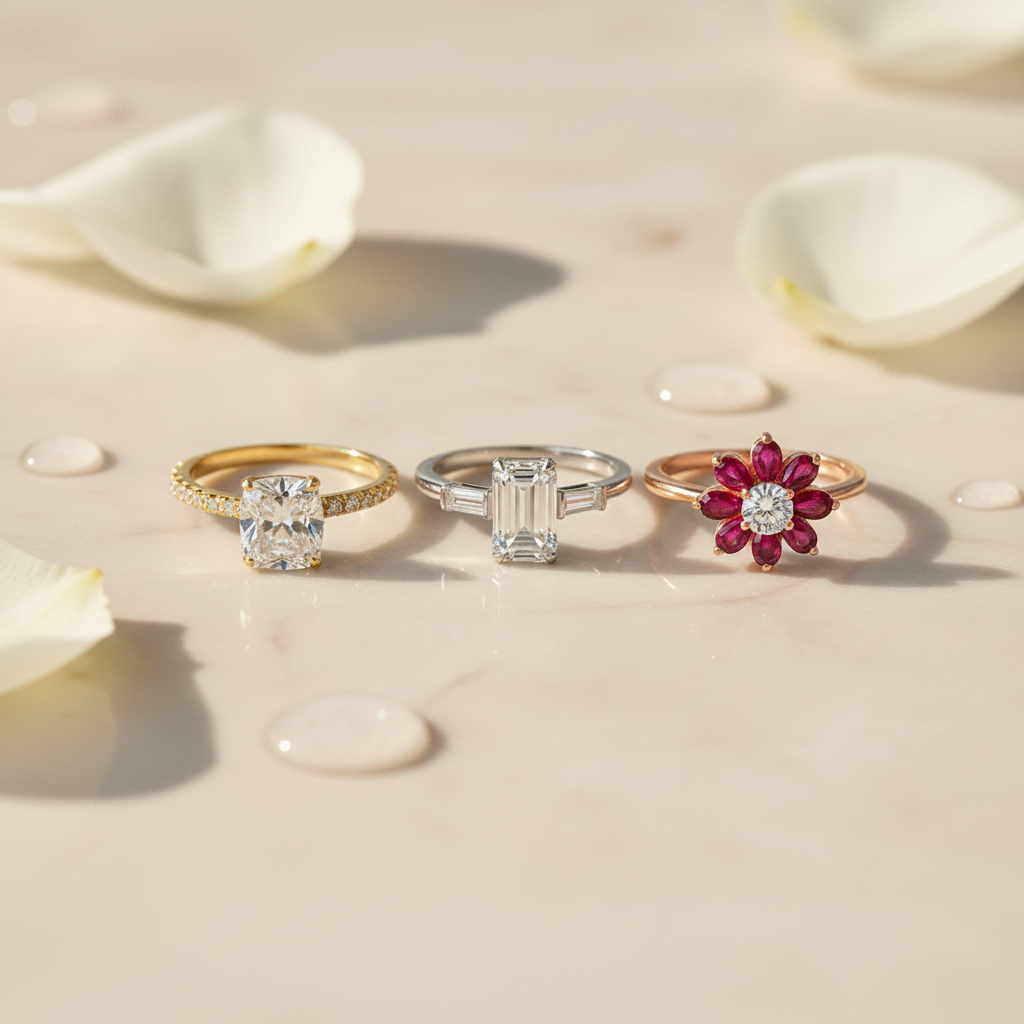
In short: Yellow, white, and rose gold have the same purity (18k = 750‰ pure gold) — only the added alloy changes. Yellow uses copper and silver, white contains palladium with a rhodium finish, and rose has more copper, giving it a warm tone. The choice depends on skin tone, personal style, and how it pairs with other jewelry.
Same gold, different colors: why alloys exist
Pure gold (24k) is intensely yellow, but it's also too soft to be used in jewelry: it scratches and deforms easily. That's why jewelers mix pure gold with other metals — the so-called alloy — to make it durable and workable. The composition of the alloy determines the final color, while maintaining the same 18k (750‰) purity.
18k Alloy compositions (table)
| Color | Pure gold | Main alloy metals | Effect on color |
|---|---|---|---|
| Yellow | 75% | Copper (~12.5%) + Silver (~12.5%) | Maintains the warm yellow of gold |
| White | 75% | Palladium (or nickel) + Silver | Turns light gray; final rhodium plating gives a brilliant white |
| Rose | 75% | Copper (~22%) + Silver (~3%) | High copper content gives a pink/bronze tone |
Do all three have the same pure gold value?
Yes. For the same weight and purity (18k = 750‰), the pure gold content is identical: 75% of the jewelry's weight. The price difference between the three colors depends on the alloy metals used (palladium in white gold is more expensive than copper) and the surface treatment — not the gold content.
Yellow gold: the classic par excellence
Yellow gold is the most traditional and recognizable form. Its warm, intense color is the result of copper and silver mixed in balanced proportions that do not alter the typical gold hue. It does not require additional surface treatments: the yellow alloy is stable over time and maintains its original color without special maintenance.
Pairings and styles
- Classic and timeless: yellow gold never goes out of style in Italian jewelry. It pairs perfectly with colored gemstones (rubies, emeralds, sapphires) that enhance the warm contrast.
- Boho and vintage style: chunky chain necklaces, bombé bangles, and elaborate pendants in yellow gold are staples of 70s style and current trends.
- Wedding rings: true Italian tradition calls for a wedding band in 18k yellow gold — an undisputed classic.
Suitable skin tone
Yellow gold enhances warm complexions (olive, golden, amber, ebony). If you have yellow or orange undertones in your skin, yellow gold is your natural ally. It also works on light skin with neutral undertones, but on very fair skin with cool undertones (pink/blue), it can appear slightly "heavy."
White gold: the role of rhodium
Natural white gold is not completely white: the alloy with palladium (or nickel) produces a light gray metal. The brilliant white we see in jewelry is the result of a rhodium plating — a very thin layer of rhodium (one of the rarest metals in the world) applied to the surface through an electrochemical process.
Does white gold "yellow"? How to revive it
With daily use, the rhodium layer gradually wears off (typically after 12-24 months of intensive use, sooner in areas of friction). The jewelry returns to its natural light gray color — this is not a defect, but normal wear and tear of the treatment. The solution is re-rhodium plating: the jeweler reapplies the rhodium bath in a few minutes, and the jewelry becomes brilliant as new again. The cost is low (typically €15-30) and lasts another 1-2 years.
Palladium vs. nickel: which to choose for sensitive skin
Cheaper white gold alloys use nickel, which is one of the main allergens in jewelry. Quality jewelry (like what we carry at Tosti) uses palladium, which is much less allergenic. If you have sensitive skin or have ever had reactions to jewelry, explicitly choose white gold with a palladium alloy and ask your jeweler before purchasing.
Rose gold: contemporary charm
Rose gold — also called rosé gold — has become one of the most requested colors in the last fifteen years. Its bronzed and romantic tone is obtained by increasing the percentage of copper in the alloy: the more copper, the more the color shifts towards pink/orange. There is no fixed standard for the shade of rose: each goldsmith calibrates the alloy in their own way, so you may find shades ranging from pale pink to a more decisive coppery pink.
How copper gives tone and how long it lasts
Unlike white gold, rose gold does not require surface treatments: the color is intrinsic to the alloy and does not fade. However, a high percentage of copper can — in the very long term — dull slightly upon contact with sweat and perfumes. A gentle cleaning is enough to restore its luster.
Pairings with gemstones and other metals
- Gemstones: rose gold enhances white diamonds, morganite, rose quartz, opal, and warm-toned stones. With emeralds and sapphires, it creates interesting contrasts.
- Mixed metals: rose gold pairs well with yellow gold for layering, less so with white gold (contrasting tones). The current trend is to mix rose and yellow for contemporary looks.
How to choose the right color
Table: skin tone × style × occasion → recommended color
| Skin type / style | Yellow gold | White gold | Rose gold |
|---|---|---|---|
| Warm complexion (olive, golden) | ⭐⭐⭐ Excellent | ⭐⭐ Good | ⭐⭐⭐ Excellent |
| Cool complexion (fair, rosy) | ⭐⭐ Good | ⭐⭐⭐ Excellent | ⭐⭐ Good |
| Neutral complexion | ⭐⭐⭐ Excellent | ⭐⭐⭐ Excellent | ⭐⭐⭐ Excellent |
| Classic / elegant style | ⭐⭐⭐ | ⭐⭐⭐ | ⭐⭐ |
| Modern / minimal style | ⭐⭐ | ⭐⭐⭐ | ⭐⭐⭐ |
| Romantic / feminine style | ⭐⭐ | ⭐⭐ | ⭐⭐⭐ |
| Wedding band / engagement ring | ⭐⭐⭐ (Italian tradition) | ⭐⭐⭐ (diamond settings) | ⭐⭐ (contemporary trend) |
Can different gold colors be mixed (layering)?
Yes, and mixing colors is one of the strongest trends of recent years. The unwritten rule is: mix a maximum of two colors in the same outfit. Yellow + rose work very well together. White + yellow is a classic combination. All three together require a keener eye to avoid visual clutter.
Which costs more? White, yellow, or rose gold?
For the same weight and purity, white gold is generally the most expensive for two reasons: the palladium in the alloy is more expensive than the copper and silver, and the re-rhodium plating adds a processing cost. Rose gold is the cheapest in terms of alloy (copper is the most accessible metal). Yellow gold falls in between. The price differences for the same piece of jewelry in the three versions are generally in the order of 5-15%.
Yellow, white, and rose gold jewelry at Gioielleria Tosti
At Gioielleria Tosti in Cosenza, you'll find our collections in all three colors, all in certified 18k 750/1000 gold, Italian production. You can see them in person and compare them directly on your skin — the best way to choose the color that truly enhances you.
Women's 18k gold necklaces →
Women's 18k gold rings →
Men's white gold bracelets →
Gold earrings →
Frequently asked questions about colored gold
Is white gold more expensive than yellow?
Usually yes, slightly. The palladium used in white gold alloy is more expensive than the copper and silver used in yellow gold. Additionally, rhodium plating adds a processing cost. The price differences between the yellow and white versions of the same piece of jewelry are typically around 5-15%.
Is rose gold fashionable?
Yes, rose gold has been one of the most requested metals since the 2010s and has remained steadily on-trend. Its warm and romantic tone is popular because it adapts to both classic and more contemporary styles. It's not a seasonal fad: it has become a modern classic in jewelry.
Can I mix different colored golds?
Yes, the "mixed metals" trend is well-established. The advice is to limit yourself to two colors in the same look to avoid dispersing the effect. The most successful combinations are yellow + rose (both warm tones) and white + yellow (elegant contrast).
Does white gold need to be re-rhodium plated? How often?
Yes, white gold periodically requires re-rhodium plating — the reapplication of the rhodium layer that gives it its brilliant white color. The frequency depends on use: those who wear it daily take it to the jeweler every 1-2 years; for occasional use, every 3-4 years. The cost is low (€15-30) and the operation takes only a few minutes.
Which color is best suited for fair or olive skin?
Fair skin with cool undertones (pink, bluish) is enhanced by white gold, which echoes silver tones. Olive skin (warm, yellow-green undertones) looks great with both yellow and rose gold, which enhance its natural luminosity. Very dark skin pairs beautifully with yellow gold for a warm-on-warm contrast.
Article written by the editorial staff of Gioielleria Tosti — Cosenza, since 1972.
Published on 2026-06-23 | Updated on 2026-06-23
SHARE: